
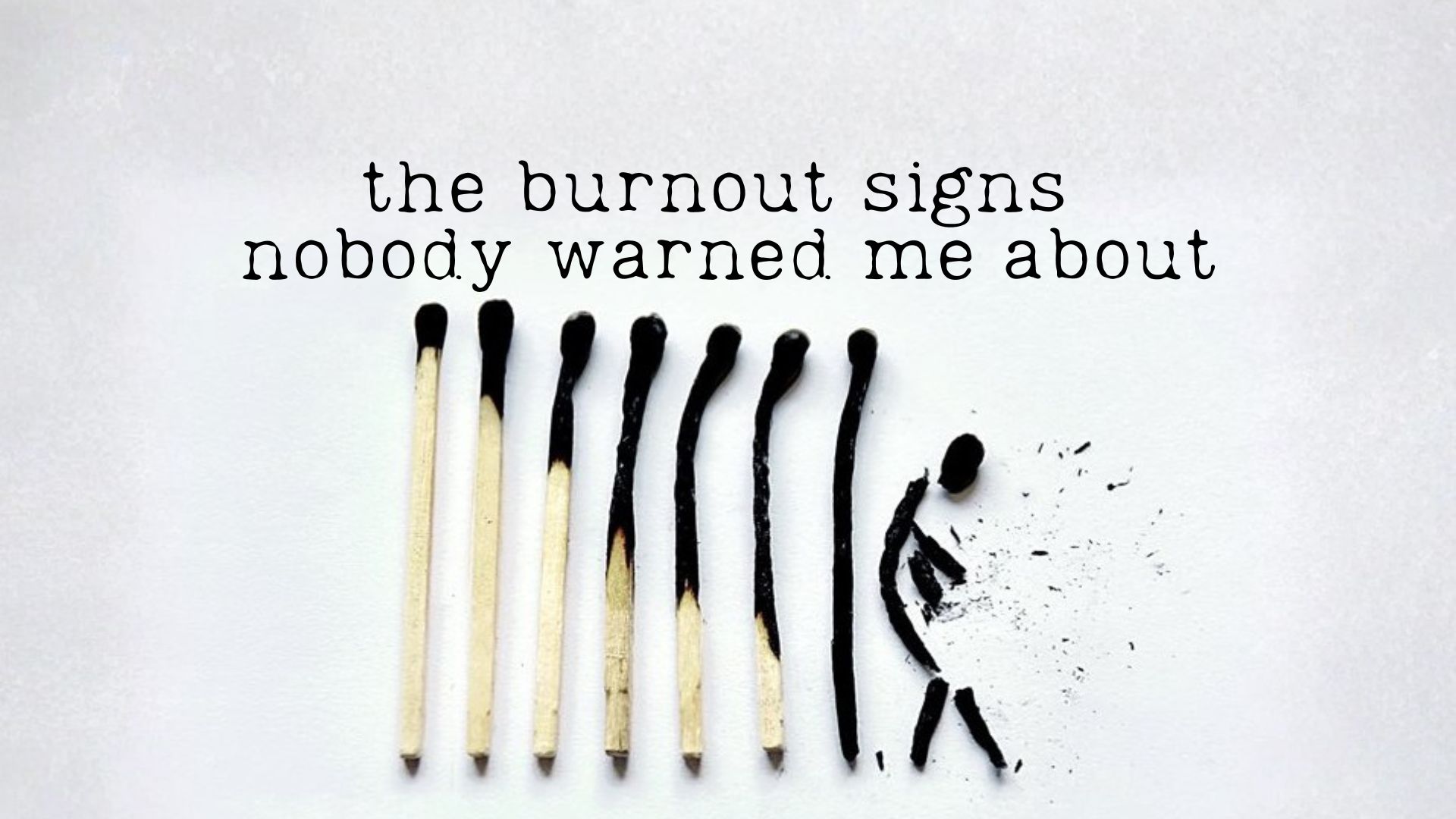
I thought I knew what burnout looked like.
I thought it looked like someone quitting. Crying in the parking lot. Sleeping through their alarm and just… not showing up. I thought if I was still showing up — still planning the events, still answering the emails, still smiling at people in the hallway — I was fine.
I was not fine.
Ministry burnout rarely announces itself. It creeps in quietly, wearing the costume of faithfulness. And by the time most of us recognize it, we’ve been running on empty for months. Here are the warning signs I wish someone had pointed out to me — and that I now watch for in myself and in the people I serve alongside.
1. You Stop Being Curious About People
Early in ministry, you genuinely wanted to know how people were doing. You remembered names, asked follow-up questions, and felt something when someone shared a struggle with you.
Burnout doesn’t always make you mean. Sometimes it just makes you… hollow. You start going through the motions of care without actually feeling it. Conversations feel like obligations. You find yourself hoping people won’t stop to talk after service.
If you’ve lost your curiosity about people, that’s worth paying attention to.
2. Your Days Off Don’t Actually Rest You
You take the day off. You sleep in. You do “nothing.” And you wake up the next morning feeling exactly the same.
Rest stops working when your nervous system is running a background program called everything I haven’t finished yet. True rest requires mental disengagement, not just physical stillness. If your days off feel like hitting pause instead of actually recovering, your tank is running dangerously low.
3. Everything Feels Urgent and Nothing Feels Important
Burnout scrambles your sense of priority. Suddenly the bulletin typo feels catastrophic and the discipleship gap in your church feels… manageable, actually. You find yourself pouring energy into tasks that are loud and ignoring the ones that actually matter.
This is your brain protecting itself. Shallow tasks are safer than meaningful ones when you have nothing left to give. Watch for the moment when you’re working hard but not working on anything that matters.
4. You Resent the Things You Used to Love
That ministry you fought to launch? It now feels like a burden. The event you look forward to every year? You’re secretly hoping it gets cancelled. The people you genuinely love? Their needs feel like an imposition.
Resentment is not a character flaw — it is a data point. It is your soul telling you that you have been giving without being refilled for a long time. Don’t shame yourself for feeling it. Take it seriously.
5. You’ve Stopped Talking to God About Anything Real
You’re still praying. You’re still in the Word — probably even preparing lessons and sermon notes and devotional content for other people. But somewhere along the way, your personal walk quietly became professional.
You’re producing spiritual content. You’re not actually communing.
This one is easy to miss because from the outside — and even from the inside — it looks like faithfulness. But if you can’t remember the last time you brought something real to God, not a request list or a lesson prep question, but an honest conversation about how you actually are, pay attention to that.
6. You’ve Become Irritable in Private
You hold it together at church. You are patient, gracious, and professional with the people you serve. But at home — with your family, your close friends, your dog — you’re short-tempered, easily frustrated, and exhausted by small things.
The people closest to you are often the first to feel your burnout before you recognize it yourself. If the people in your inner circle are walking on eggshells around you, that is information worth receiving humbly.
7. You Can’t Remember Why You Started
Not in a romantic, “I’ve forgotten my first love” devotional way. In a genuine, flat, I actually cannot connect to that anymore kind of way.
Your calling used to feel alive. There was a reason you said yes to this. When you try to access that now, it feels far away — like a memory of a feeling rather than a feeling itself.
This is serious. Not because you’ve lost your calling, but because you’ve lost access to it. That’s what depletion does.
So What Do You Do?
Start by telling someone the truth. Not a sanitized “I’m a little tired” version — the real version. A trusted friend, a mentor, a counselor. Burnout grows in isolation and shrinks in honest community.
Then give yourself permission to stop performing recovery. You don’t need a vacation that produces Instagram content or a sabbatical with impressive spiritual outcomes. You need real, unglamorous rest. Boredom, even. Margin with no agenda.
And finally — and I say this gently — consider that the pace you’ve been keeping may not be sustainable simply because you’re willing to keep it. Willingness is not the same as wisdom. God did not design you to run indefinitely without refilling.
You are not more valuable when you are depleted. Take care of the minister, and the ministry will follow.





Leave A Comment